


“A whole new life has been given to me and I am fiercely protective of it”
 “It was a blessing in disguise,” said Ashley May Williams, who found herself hospitalized due to acute pancreatitis caused by many years of heavy drinking. “The pain was unbearable. I begged the nurses to help me. I could no longer carry on as I was.” Ashley told her nurses that she had four children at home, an emotionally abusive marriage and drank alcohol excessively to numb her pain. Now, alone in the hospital, feeling isolated from her extended family and friends, she was on a “very dark path.” What initially felt like a betrayal “actually saved my life”, she explained. The hospital contacted the Department of Children and Families (DCF) for support based on Ashley’s self-disclosure of alcohol dependency and a positive toxicity screen for marijuana. Ashley said she was “petrified when DCF got involved.” However, her childhood trauma and mental illness, along with a 13-year abusive marriage, made her view alcohol as her only saving grace.
Despite the support from DCF and FBR, Ashley said it was difficult to face up to her situation. “I broke my own heart one night,” she recalled. “I crossed my own boundaries and compromised my values." Ashley explained that she went out one evening with her brother and relapsed — drinking more in that one night than she ever had. She had little memory of what transpired and was horrified when she recalled bits and pieces. It was at this moment that she realized “anything that could put me at such risk of hurting myself would need to go.” She fully committed to her sobriety. 
“I adored my team”, referring to Abigail, Bianca and Jess from CHMA's FBR program. Jessica (Jess) Cestaro, an FBR Program Supervisor from FBR, who worked with Ashley and oversaw the clinical team, said that Ashley “committed to her work with FBR and elected to stay involved after the 6-month plan ended. She was involved with the program for an entire year, working with the clinician in her home three times a week. She also used the weekend on-call service to help her when she was in need of additional supports.”
 Ashley said her FBR team never gave up on her. They helped her to change her thinking process and work through “loads of shame.” Ms. Cestaro said, “Ashley was able to get a solid base of autonomy,” according to Clinician Cestaro, asserting herself and finding the confidence to leave a co-dependent relationship with her husband. Ashley worked on managing her complex childhood trauma and learned how to manage stress and conflict by developing healthy strategies that would have previously led her to drink." She meditated, practiced yoga, took walks and increased her social connections with sober friends and family.
Referring to her DCF social worker, Kaela Minerly, Ashley said, “there was no judgement, just complete acceptance and understanding. …They gave me a second chance.” Clinician Cestaro was pleased with DCF’s trust in the FBR model. “DCF built on Ashley’s strengths and collaborated with FBR every step of the way.” Cestaro felt that DCF’s confidence in CMHA's work helped Ashley to succeed. Ashley said that the longer she was sober, the more she wanted to stay sober. “I steam rolled forward,” said Ashley.
Ashley said her children are her biggest fans, calling them “my biggest supports.” Ms. Cestaro explained that “Ashley had a very solid relationship with her children coming into the program. Her sobriety helped her to feel more present, while being very aware that the consequences of her sobriety enhanced the relationship that she had with all four of her children.” Ashley vividly recalled a moment when she “escaped to the family van one night” to spend some time alone after a verbal altercation with her husband. Her 11-year daughter came outside to check on her and Ashley apologized, knowing how much the kids had been through and realizing that she would need to separate from her husband to begin the healing process. Ashley said, “This was not the life I imagined for all of you.” Her daughter’s words resonated with her: “I would rather this new life then to fall asleep and wake to find you drunk, again, downstairs”. It was then, Ashley said, "very fast, the fog cleared, and I could see everything clearly." Cestaro added that Ashley engaged in arts and crafts with her younger children and ensured that her teens were receiving therapy. “She was very keen on knowing what her children needed."
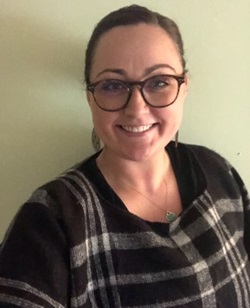
 “I have never felt so alive or more myself,” Ashley said. Gushing with how nice it feels to be happy and in control, sitting with her kids at the dinner table, completely sober, simply “creating positive ripples” and feeling like a “cool” Mom who is fully present. “A whole new life has been given to me”, Ashley said, “And I am fiercely protective of it.”